Part 2: Nobody spends their own money like this
You are having an extension built. You have found a builder with a poor reputation - late on his last three jobs, a couple of disputes, some work that had to be done twice - but his price is the lowest and he is saying the right things, so you are going to appoint him anyway.
To manage the risk, you have adopted an international standard for collaborative working, put in monthly steering meetings and agreed an innovative payment mechanism linked to milestones. You have also hired an English graduate from a global consultancy to review his bricklaying every Friday afternoon.
You would not do this, and neither would anyone else, because it is your money and your house. You would simply go and find a better builder.
I am clearly being facetious, but how the UK’s interpretation of the law, and the subsequent definition of procurement policy, got into this position is mind-blowing. It certainly is not “fair”.
Fair to whom?
Somewhere along the way, “fair” stopped meaning fair and started meaning defensible against challenge.
Fair to the supplier preparing to promise something it cannot build? Fair to the taxpayer, who will discover that two years later? Fair to the user who eventually has to take the thing out of the box and make it work?
When people say, “It wouldn’t be fair”, what they generally mean is that a losing bidder might send a shitty email. They may even threaten litigation. The possibility of that email then outweighs almost every other consideration. The process becomes focused on avoiding challenge rather than making the best decision, and those two things are definitely not the same.
This would be easier to defend if we were protecting a genuinely open and evenly contested market. We are not:
In 2024-25, the MOD’s ten largest suppliers received more than 39% of its procurement expenditure. SMEs received just 4% of direct MOD expenditure with UK industry, while 71% of the value of new SME contracts was awarded competitively. The result is a highly concentrated core surrounded by a fiercely competed perimeter.
That perimeter is where competition is often applied most aggressively. The contracts are much smaller, switching suppliers is easier, and the participating businesses have the least capacity to absorb months of bid writing. Because the process must remain “fair”, the same incumbents receiving major direct awards are also welcome to compete at the bottom. The practical effect is that we impose the greatest competitive burden on the businesses least able to absorb it.
I am not arguing that incumbents should be excluded simply for being large. Some large suppliers are excellent, and some small suppliers are terrible. The underlying problem is that the ritual/cult of competition is being confused with a functioning market.
But that is the process…
The stated priority is value for money, which is reasonable enough.
To demonstrate value for money, a requirement is sent to competition. A competition needs award criteria, and there is rarely enough time or specialist knowledge to design those criteria properly for a difficult engineering problem. They are therefore copied from the previous procurement, adjusted slightly and issued to bidders.
The bidders respond in writing. Their submissions are read in a room, scored against the published criteria and added together. The winner of that exercise is usually the company that wrote the best bid. That company may also be the one most likely to deliver something useful: a problem is that the process is not especially interested in finding out, and the surprises are deferred.
“We can only mark what is in front of us.”
That isn’t really true because it overlooks the fact more could have been done.
The Cabinet Office’s own guidance allows competitions to include physical inspection and demonstration. Authorities can visit a site, inspect facilities, run a pilot or ask suppliers to demonstrate what they can do. The requirement is that the evidence is assessed against criteria published in advance.
The problem is that a site visit takes time and requires people who can tell a good factory from a bad one. It also creates visible judgement, which means the weakest suppliers are often waiting for a civil servant to make the slightest mistake so they can claim the process was unfair. FWIW: If that is your strategy, try being better instead. Then reflect on how much harder you are making it to get the right things to end users.
So instead, we assess engineering by reading about it...
Imagine selecting a cricket team this way. Nobody is permitted to watch anyone bat. Each player submits a written description of their technique in Arial 11, with a ten-page limit, and the submissions are scored against a matrix. The winner has excellent prose. They may also be able to hit a ball or have a great forward defensive technique. You will find out in approximately eighteen months.
We call the process objective because every supplier was subjected to the same test. A bad test applied equally is still a bad test.
But it is fair. Keep smiling and saying fair. That will solve it. Remember: fair.
The wrong problem is being managed
We are investing in improved delivery models, partnership structures, payment mechanisms, assurance processes, frameworks, architecture boards and review points. Many of these things are useful and some are non-negotiable but they cannot rescue a fundamentally poor choice of supplier.
The Department should therefore become obsessive about supplier selection. The first question should be simple: who is most likely to deliver the required outcome? Everything else should help answer that question. Currently, the system asks a different one: which decision can we defend most easily if somebody complains?
And none of this is about taking more risk. It is about taking different risks. The current system just shifts the risk off to the right - away from the procurement decisions and onto delivery (off this year and into the next decade).
Start with what must be true
The Department should begin with a small number of outcomes that are difficult to argue against. It should then push policy, process and the law as hard as necessary to make those outcomes possible. Currently, too much of the activity around procurement reform is window dressing and the announced budget increases risk being used to create breathing room for weak programmes, absorb foreign-exchange exposure and fund overruns caused by (you guessed it) poor supplier selection.
For the market to escape the doom loop, four things must be true.
1. Excellence must lead to opportunity
At present, a supplier can recover a programme, outperform expectations and still be treated almost identically to a company that failed. In my experience, good performance is praised, but it doesn’t mean you will be rewarded, and that is a terrible signal to the market. Strong suppliers should know that delivery improves their prospects of further work.
Responding that a new policy already allows for this is not good enough. Policy is meaningless unless it is implemented, enforced and reflected in decisions at desk level.
2. Failure must have consequences
Poor performance currently creates more governance, more meetings and often gets the supplier more money. It does not reliably reduce a supplier’s chances of winning the next contract. Failure should affect future opportunity, margin and reputation. That does not mean punishing every delay, but repeated incompetence should become a serious commercial problem.
It will not always be easy to prove neatly on a spreadsheet, but experienced people usually know which suppliers are failing. Capture the evidence, lawyer up and deal with it head-on. Occasionally, some heads will need banging together.
3. Decisions need owners
Major decisions are often attributed to teams, boards, programmes or processes. Those things cannot be held accountable, but people can.
A named person should be responsible for recommending the supplier, explaining the evidence and staffing the decision for approval. Accountability cannot disappear into collective language the moment it starts going wrong. The decision should later be reviewed against delivery. Not to find someone to blame, but to improve judgement and expose patterns in how procurements are run.
If you cannot answer the question, “Who chose this supplier, and can I speak to them?”, you are already in a very bad place.
4. The UK must receive a clear benefit
A compliant procurement process does not help anyone cross a river, reduce the likelihood of being hacked or win a firefight. The outcome must be capability, economic value, sovereign control or some deliberate combination of the three.
That benefit should be defined before the procurement begins and tested after delivery. Where is the intellectual property held? Where are the engineers? Can the capability be modified, supported and scaled in the UK without asking permission from a foreign parent company?
I am trying not to sound protectionist, because shutting out foreign companies is not the answer, but UK businesses face severe market asymmetries. A US-headquartered contractor can compete for the overwhelming majority of UK opportunities. A UK-headquartered business without the necessary US security arrangements cannot do the same in America, and the barriers to entry are becoming higher.
The UK takes a different approach. We ask domestic companies to compete openly at home while accepting that many overseas markets are effectively closed to them. We then hesitate to back our strongest businesses because doing so might not look “fair”.
European countries are also far more deliberate about backing regional champions. France has supported Mistral. Germany has placed major contracts with STARK and Helsing. Large, multi-year awards give those companies credibility, traction and enough certainty to keep private capital interested, which the UK claims is of upmost importance.
That is not a free market - strategy and policy contradict action. Any proposed reform should be tested against these four conditions: Does it reward excellence? Does it penalise failure? Does it create visible accountability? Does it produce a meaningful benefit for the UK?
“It isn’t that easy, Rob”
No, it is not. Those who know me know how deeply I care about this, and how well I understand the difficulty of changing systems like these. I have tried before and failed to move some of the things I believed needed changing. But if the Department is serious about reforming procurement and breaking the doom loop, this work has to be treated as a priority.
The proposals should be challenged and peer-reviewed by people with genuine expertise, then translated into practical guidance that reaches desk level within weeks or months, not years. And guess what: the outcome will not feel fair.*
*Not if “fair” means allowing underperformers to keep winning.
And an important nod to culture
If someone took the time to examine my business and explain how it could perform better, I would want to understand what they had seen. I would drive to meet them with a pack of fresh whiteboard markers. Treating feedback and recommendations negatively is a serious cultural problem. It puts protection of the institution ahead of improving its outcomes.
Turning this around requires exceptional leadership and a genuine sense of crisis: clear priorities, rapid decisions, visible accountability and a willingness to engage constructively with outsiders.
Act. Go now.
Part 1: Right, where were we?
In the space of six weeks this summer, we got a new Prime Minister, a third Defence Secretary, and a Defence Investment Plan that turned up roughly a year late with a lot of money to find. For those living in a cave, the Defence Secretary who resigned over the funding settlement is now the Chancellor.
I am not being sarcastic when I say this is the most interesting moment in defence procurement in ages. It also has a very high probability of going wrong.
Why I went quiet
I used to be vocal - very vocal - about the state of UK regulated procurement. In British institutional culture, this was treated as though I had chosen the path of outright anarchy.
Then I stopped commentating, which sounds like it ought to have a story behind it but doesn't; I have simply been heads-down building Rowden, and anyone who has built something genuinely new will recognise how all-consuming that becomes.
In the years since - 2021 to 2026, give or take - a good deal of what I said became accepted. Ideas once dismissed as disruptive, naive or simply inconvenient are now delivered with great seriousness by the same institutions, and occasionally the same individuals, who once messaged me to explain why they did not like me saying them. A trendsetter, you might say. Much like my M&S-fuelled interpretation of industrial chic.
The tricky bit was always going to be implementation, and that is still not happening at any meaningful pace or scale. What has changed is the urgency behind it: in 2020 the case for reform was largely technological, whereas today it is being forced by threat and by money - and the fight over both is now happening (publicly).
And none of this can be passed off as ‘crazy guy in the corner’ anymore. The Defence Committee titled its 2023 report It is broke - and it's time to fix it. In May this year the MOD said that 96% of its major projects had problems with delivery or cost.
Some housekeeping on intent
I am going to talk about ‘the public sector’ and ‘industry’ as two amorphous beings. The reality is obviously more nuanced, but the groupings are useful, so bear with me.
Do I believe military personnel and civil servants want things to improve?
Yes. Overwhelmingly. Almost everyone I meet cares deeply - about better kit in users' hands, better outcomes for the Department, better value for the taxpayer.
The problem is how decisions are made and how ideas are formed. Bureaucracies trust people who look and think like them, and they tend to read challenge as criticism rather than as help. IMO, we ended in a decade long doom loop: the same people advise the same people, the same assumptions are repeated, we get the same outcomes, and everybody acts surprised at the results.
Do I believe the industrial base wants things to improve?
Mostly not, in any meaningful sense.
The traditional industrial base will back reform enthusiastically when reform moves the goalposts in its favour. It will talk about agility, innovation and partnership. It will sponsor the conference with the terrible coffee, sit on the generic panel, and publish the thought-leadership paper on why software matters.
What the traditional industrial base actually objects to is consequence. A reformed system that puts end users and taxpayers first has to be able to say no, cancel things, and let weak companies fail - or at the very least make them pay for failing, in money and in reputation.
Consequence sorts people. The good companies take the accountability and get better, because there is now something in it for them: they move faster, carry more risk, build before they are asked to. The weak ones, big and small alike, do two things at once. In public they call for reform of the structures that shelter them. In private they fight a spirited rearguard action, spreading FUD about the new entrants and about the incumbents who have actually changed.
Those are also the firms the Department turns to for advice. That is the doom loop in commercial form: we ask the companies least likely to survive change to set aside their own interests and tell us what change should look like.
They will decay eventually, I just expected it to be quicker. The decisions being taken keep buying them time.
Obviously, I am conflicted
I run a company that stands to gain from most of what I am about to argue for. Rowden does better in an environment that buys on merit, moves quickly and pays for outcomes, so discount me accordingly.
…but for that to be worth anything you have to discount the people arguing the other way at exactly the same rate (and take a look at who is paying for their exhibition stand while you are at it, because it isn’t private capital).
What I would offer in mitigation to my bias is the unique vantage point. Having been inside the system and then led the kind of new entrant UK industry insists it wants to see succeed, I have watched supply-chain trade-offs, pointless regulated competitions, good decisions and terrible ones from both sides of this debate. None of that makes me right, but it does mean I am not guessing.
It is also why I will argue for what is right for the end user even when it costs Rowden work. I would rather be the company someone rings for a straight answer than the one that won the contract it should have told them wasn’t even required.
What follows
I am going to start by writing on a topic uncharacteristically high-brow: the UK's post-Thatcherite attachment to free markets, and why it does not survive contact with this new environment (protectionism etc.).That will be coupled with an attack on the use of the word ‘fair’, which has become one of the most expensive words in regulated procurement.
‘it wouldn’t be fair’
In practice ‘fair’ now means defensible in court, and any organisation that optimises for not being sued will do two things reliably:
Be sued more
Buy the wrong thing (slowly).
Then I will retreat to familiar ground and hit some key topics like IP and engineering culture. The NAD said in March that the Department is ‘trying to avoid development, so we just go shopping instead’. If that is the direction, then IP is going to be a big deal and it needs discussion.
More to follow. As per 2021: gripes to my inbox, please.
Why The UK MOD Should Establish A Non-Profit Engineering Organisation
The UK thinks it has a process problem in defence procurement. It(mostly) doesn’t. The actual problem is that no one knows who is telling the truth, and too few people care to find out.

It should be obvious that industry is incentivised to fib, but I’m not sure it is.
In procurement, the hardest judgement is whether a proposed solution will actually work. In the most complex parts of the market, that judgement has become harder for the buyer and easier for the seller to manipulate. That is what we call knowledge asymmetry. Example: Buyer asks to get a tank to the moon. Seller can’t get a tank to the moon but needs the work, and draws a picture of a tank parachuting onto the moon. Seller: ‘looks pretty legit, they’ve shown how it will get onto the moon - 10/10’
When the deepest specialist knowledge sits inside the companies bidding for the work, and the buyer cannot consistently separate what is credible from what is simply well presented, that gap gets exploited.
The problem did not appear overnight.
The Defence Evaluation and Research Agency, DERA, used to give the MOD something every serious buyer needs: a technical gamekeeper/guard dog. After the 2001 split, Dstl focused on early stage research whilst QinetiQ went from gamekeeper to poacher. No one in the public sector specialised in exploitation, production and supply chain at scale.
The timing was also an issue, as the technology environment was about to become much more complex. Since the break up of DERA, we’ve had cloud, smartphones, cheap sensors, modern software tooling and now AI, which have compressed development timelines and increased technical complexity. The government’s own Defence and Security Industrial Strategy says the UK needs to identify promising technology, exploit it and get it to the frontline faster than its adversaries. That ambition is right. But ambition without strong technical buyers simply creates an ongoing opportunity for those who can play the system rather than deliver what is needed.
Too much of the space left behind by the DERA divorce has been filled by professional services firms whose incentives are tied to time, headcount and lengthy analysis. Many of the people in those firms are capable individuals, but that is largely irrelvant. The point is that the model is structurally incentivised to extend projects, not deliver quickly.
There is a cultural angle too, and it matters more than people admit.
The best scale-ups and engineering-led businesses move quickly because bad news moves quickly. Problems get surfaced early and trade-offs get made in the open. In too much of defence procurement, that kind of honesty is still treated as disruptive, rude or upsetting. Teams that challenge assumptions, surface delivery risk and push for hard decisions can end up being penalised simply for making the room less comfortable. Meanwhile, those who make people feel good fare better.
It is fixable.
The UK should create a genuinely independent, not-for-profit engineering organisation with one clear job: restore technical judgement to the system. It should be an engineering referee that can hire talent at market rates, operate independently, and focus first on the areas of technical assurance where conflicts and complexity are highest. Give it a two-year prove-or-stop remit and a defined role where it gets first refusal on policy-defined professional services work (PSS, in old speak).
None of this is anti-industry. Quite the opposite.
Better judgement would help the best businesses win. It would favour companies that can actually build, integrate and deliver. And frankly, the fact that I’m a founder arguing for more scrutiny should tell you something about how bad it is. Any company that sees tougher technical discrimination as a threat is probably benefiting from the ambiguity.
The UK already knows what it wants: faster exploitation, quicker delivery to the frontline, and a stronger industrial base. What it still lacks is a buying system with enough independent technical depth to tell the difference between a persuasive plan and a deliverable one.
New companies have spent a lot of money building impressive teams and capabilities. They want to know that the MOD is operating a procurement system that is meritocratic.
It is simple to fix, and I remain consistently confused as to why nobody has just gone and done it.
Books for Builders
This is the literary toolkit I’d recommend for building:
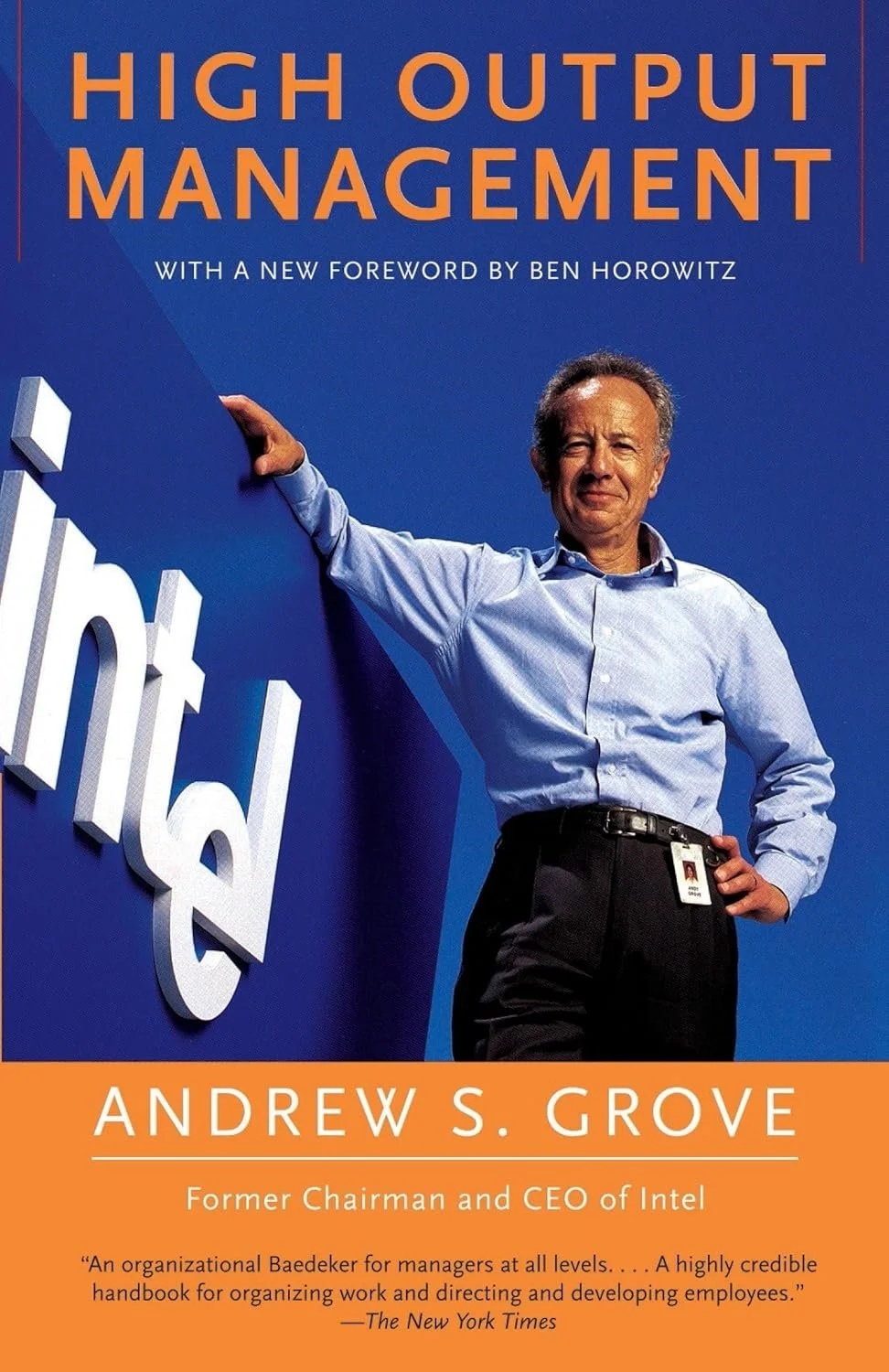
If you want to build a great business, read High Output Management by Andy Grove.
If you want reassurance that the chaos is normal, read The Hard Thing About Hard Things by Ben Horowitz.
If you are engineering systems that have to work away from desks, read Engineering a Safer World by Nancy Leveson.
If you spent too many years carrying heavy things and breaking yourself in the process, read Becoming a Supple Leopard by Kelly Starrett.
And obviously, read The Lord of the Rings, followed by Discworld (starting with ‘Guards! Guards!’).
You can do most things based on that list.